Regular grooming keeps coats clean and comfortable, and it gives you a chance to spot anything unusual — a lump, a sore or a tangled mat — early. The key is a routine that is short, positive and easy to keep up.
Brushing
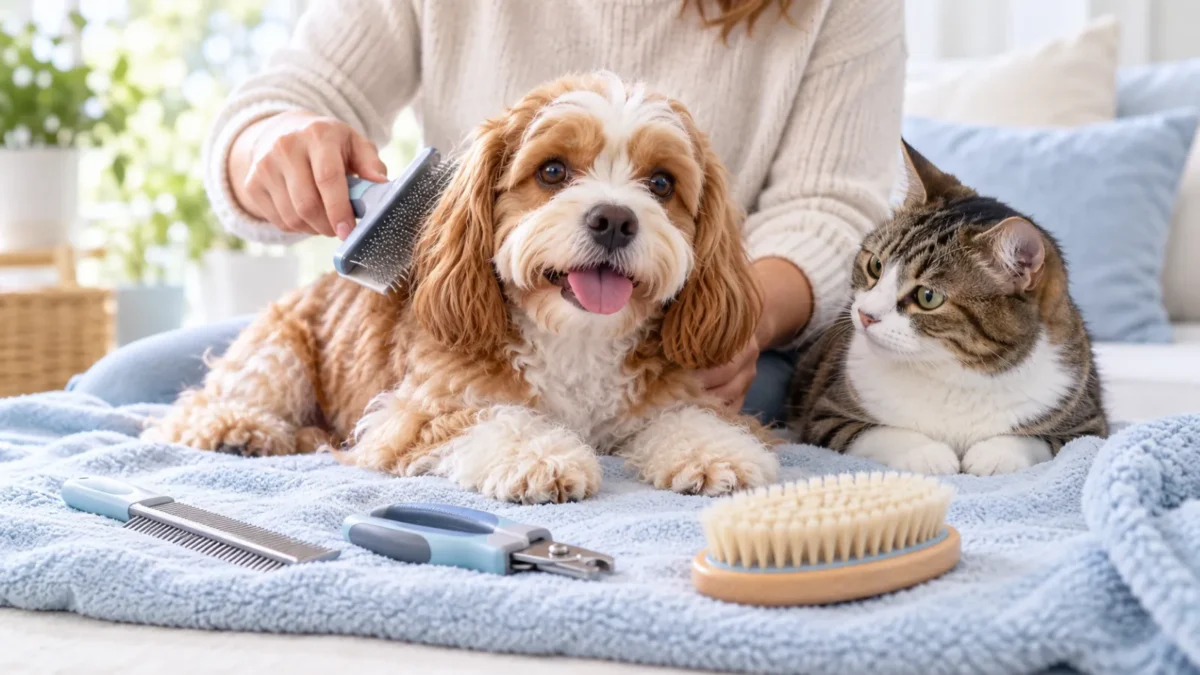
How often you brush depends on the coat. Short, smooth coats may only need a quick brush each week, while long or double coats benefit from several sessions a week to prevent mats. Match the tool to the coat: a bristle or rubber brush for short coats, a slicker brush and comb for longer ones.
Bathing
- Dogs usually only need a bath when they are dirty or smelly — bathing too often can dry the skin.
- Use a shampoo made for pets; human products are formulated for different skin.
- Rinse thoroughly and dry well, especially in skin folds and thick coats.
- Most cats groom themselves and rarely need a bath unless they get into something messy.
Nails
If you hear nails clicking on hard floors, they may be ready for a trim. Trim a little at a time with clippers designed for pets, avoiding the quick — the sensitive centre of the nail. If you are unsure, ask a groomer or vet to show you how.
Ears and teeth
- Check ears weekly. Clean only the visible part with a pet ear cleaner; never push anything into the ear canal.
- Daily or regular tooth brushing with a pet toothpaste is ideal. Dental chews and toys can help as part of a routine.
- Redness, a strong smell, head shaking or bad breath are reasons to see your vet.
Making grooming stress-free
- Start with very short sessions and finish before your pet gets restless.
- Pair grooming with calm praise and a small treat.
- Handle paws, ears and mouth gently during quiet moments so touch feels normal.
- Stop and try again later if your pet becomes stressed.
Grooming time is also a health check. Run your hands over your pet’s body and note any new lumps, sore spots or changes to their skin and coat.
Find brushes, shampoos and more in our grooming range, including brushes and combs and nail clippers.