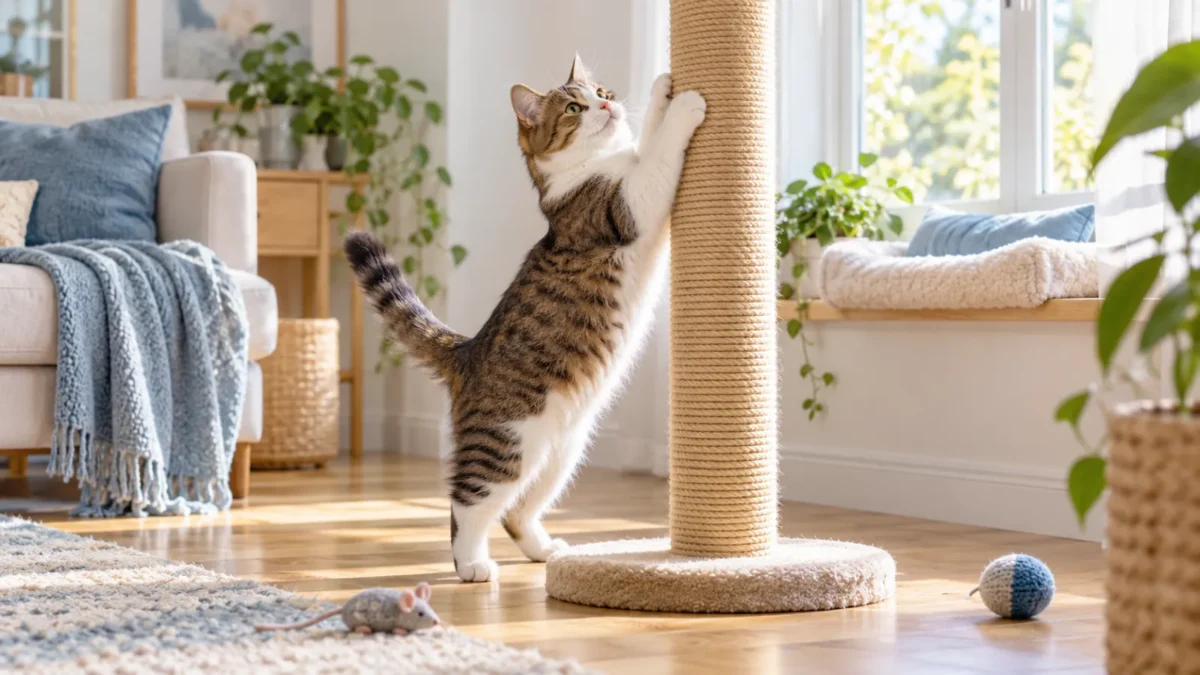
Cats scratch, climb, hide and hunt because it is part of who they are. When a home gives those behaviours a proper outlet, cats tend to be calmer — and furniture tends to survive. Here is how to set things up.
Give them somewhere to scratch
- Scratching keeps claws in condition and lets cats stretch and leave their scent.
- Choose a post that is sturdy and tall enough for a full stretch — a wobbly post is quickly ignored.
- Offer both upright and horizontal options to see what your cat prefers.
- Place scratchers near sleeping spots and doorways, where cats like to scratch.
Height and hiding places
Many cats feel safest when they can watch the room from above. A cat tree, a cleared shelf or a window perch gives them that vantage point. Just as important is somewhere to retreat: a covered bed or a box in a quiet corner helps a cat relax, especially in a busy household.
Daily play
- Short play sessions with a wand or teaser toy satisfy the urge to stalk and pounce.
- End a session by letting your cat “catch” the toy, then offer a meal or treat.
- Rotate toys so they stay interesting.
- Puzzle feeders make mealtimes more engaging.
Resources in the right places
Keep food, water and litter trays in separate, quiet locations. In multi-cat homes, give each cat access to their own resources so no one has to compete — a common cause of tension between cats.
Sudden changes in a cat’s behaviour, appetite or litter habits can be a sign that something is wrong. If you notice changes, speak to your vet.
See our cat trees, scratching posts and cat teaser toys.