Birds are intelligent, social animals that need space, variety and attention every day. Getting the basics right — cage, perches, food and enrichment — goes a long way towards a happy, healthy bird.
Choosing a cage
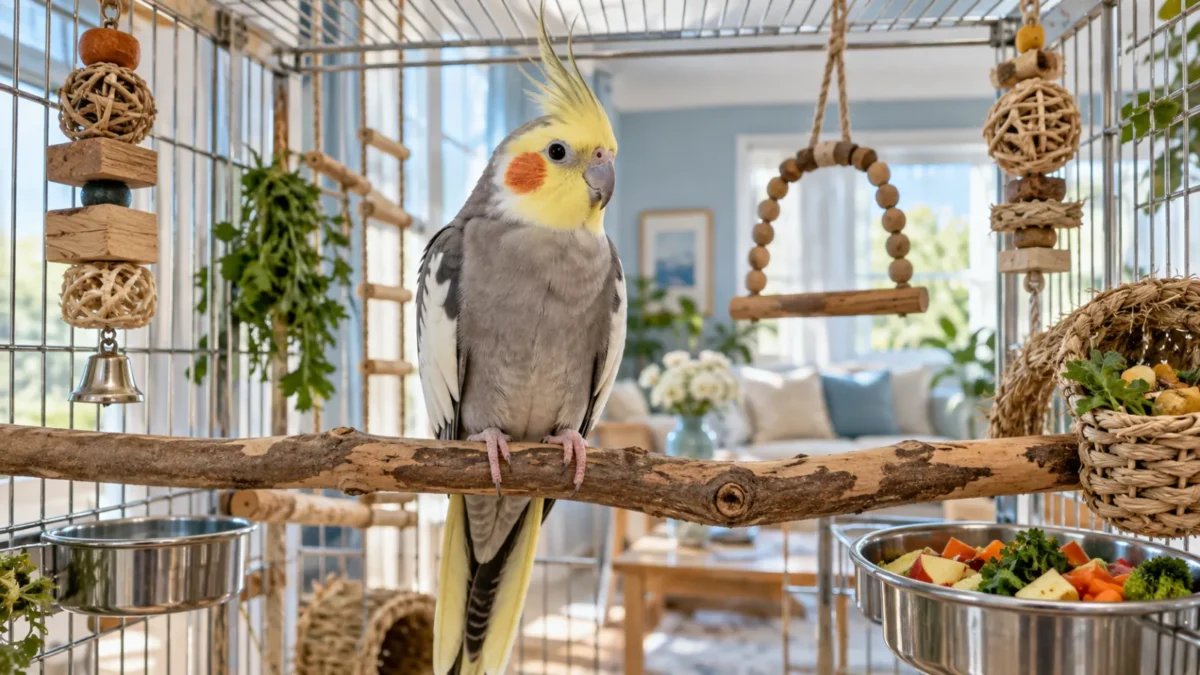
- Choose the largest cage you can: your bird should be able to stretch and flap its wings fully.
- Bar spacing must suit the species so heads and feet cannot get caught.
- Place the cage in a bright room away from direct sun, draughts and kitchen fumes.
Perches that protect feet
Birds spend almost all day standing, so perches matter. Offer several perches with different diameters and textures — natural wood is a popular choice — to exercise the feet. Position them so droppings do not fall into food or water dishes.
A varied diet
Many pet birds do best on a varied diet rather than seed alone. Offer a food suited to your species, and ask your vet or an experienced keeper which fresh foods are safe for your bird. Provide fresh, clean water every day.
Daily enrichment
- Rotate toys regularly so there is always something new to explore.
- Foraging toys encourage natural searching behaviour.
- Supervised time out of the cage, in a bird-safe room, is valuable exercise.
- Talk to and interact with your bird every day — companionship matters.
Cleaning routine
- Refresh food and water daily and wash the dishes.
- Change cage liners regularly.
- Clean perches and toys, and do a thorough cage clean on a regular schedule.
Birds often hide signs of illness. Fluffed-up feathers, sitting on the cage floor, changes in droppings or reduced appetite are reasons to contact an avian vet promptly.
Browse bird supplies, including cages, perches and bird food.