Walk down any pet food aisle and the choice can feel endless. The good news is that the most important decision is usually a simple one: choose a complete food that matches your dog’s life stage, then adjust portions to their size and activity. This guide explains what changes as dogs grow older and how to make a switch safely.
Why life stage matters
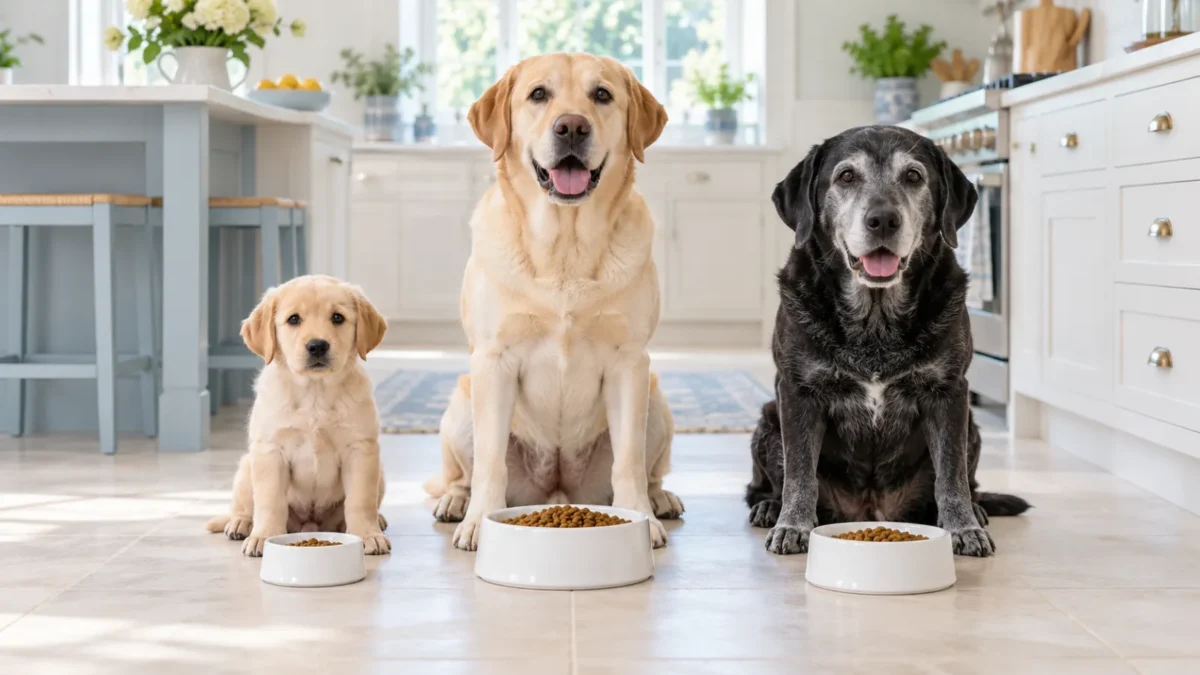
A growing puppy, an active adult and a slower senior dog use energy and nutrients very differently. Foods labelled for a specific life stage are formulated around those needs, which makes them a sensible starting point for most dogs.
Puppies
- Puppies grow quickly and need food made for growth — look for “puppy” or “all life stages” on the pack.
- Small, frequent meals are easier on young stomachs. Many owners feed three or four meals a day at first, reducing to two as the puppy grows.
- Large-breed puppies grow for longer; ask your vet whether a large-breed puppy formula is right for yours.
Adult dogs
- Most adult dogs do well on two measured meals a day.
- Activity level matters more than age: a working or very active dog may need more than a relaxed house dog of the same weight.
- Keep an eye on body shape. You should be able to feel the ribs easily without seeing them.
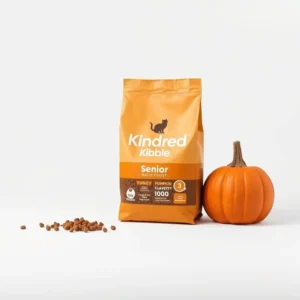
Senior dogs
- Older dogs often move less and may need fewer calories to stay at a healthy weight.
- Senior formulas can be easier to chew or digest — helpful if your dog has become a fussy eater.
- Changes in appetite, thirst or weight in an older dog are worth discussing with your vet.
Dry, wet or both?
Dry food is convenient, easy to portion and keeps well once opened. Wet food is more aromatic and adds moisture, which some dogs prefer. Many owners mix the two — a spoonful of wet food on top of a dry meal — which is fine as long as the total amount stays within your dog’s daily needs.
How to read the label
- Check that the food is described as complete — it is designed to be the whole diet, not a treat or topper.
- Find the life stage it is made for.
- Use the feeding guide as a starting point, then adjust to your dog’s body condition over a few weeks.
- Note any flavours or ingredients your dog has not tolerated before.
Changing food without upsets
Sudden changes are a common cause of loose stools. Switch gradually over about a week:
- Days 1–2: about a quarter new food, three quarters old food.
- Days 3–4: half and half.
- Days 5–6: three quarters new food.
- Day 7: new food only.
If your dog has a sensitive stomach, take the transition more slowly. Always keep fresh water available.
Treats count too. As a rule of thumb, keep treats to a small share of your dog’s daily food so that meals still provide balanced nutrition.
When to ask your vet
Speak to your veterinarian before changing food if your dog has a medical condition, is on a special diet, is pregnant or nursing, or is losing or gaining weight without an obvious reason.
Ready to compare options? Browse our pet food range, including puppy and kitten food and adult and senior food.