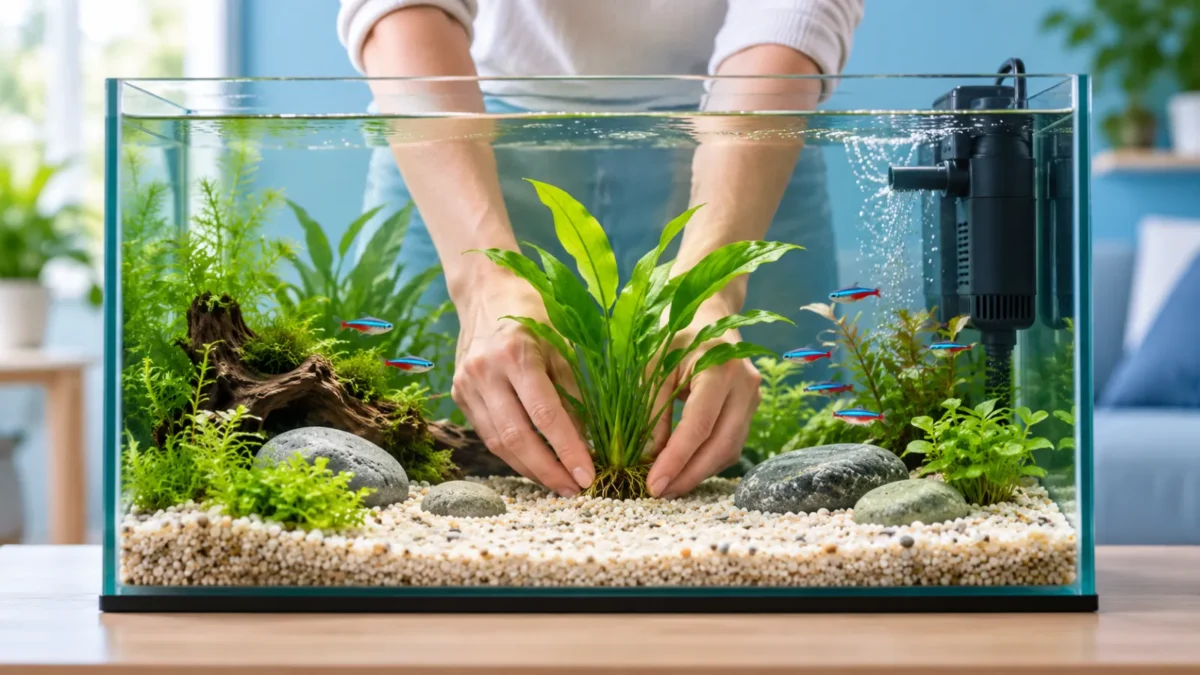
A well-set-up aquarium is one of the most relaxing things you can have at home — and most early problems come from rushing. Plan the tank, let the water mature, and add fish slowly. This checklist covers the essentials for a freshwater community tank.
1. Choose the right tank size
It sounds surprising, but larger tanks are usually easier for beginners: a bigger volume of water stays more stable when something changes. Choose the largest tank that fits your space and budget, and make sure the stand or furniture can safely take its full weight when filled.
2. Place it thoughtfully
- Keep the tank out of direct sunlight to limit algae and temperature swings.
- Choose a level, sturdy surface near a power socket.
- Avoid busy doorways where people might knock into it.
3. Filtration, heating and light
- Filter: the filter houses the beneficial bacteria that break down waste. Choose one rated for your tank’s volume.
- Heater: tropical fish need a stable temperature — check the needs of the species you plan to keep.
- Lighting: a regular day–night rhythm, often with a timer, helps plants and fish and keeps algae under control.
4. Cycle the tank before adding fish
New tanks need time for beneficial bacteria to establish. This process — called cycling — commonly takes several weeks. During this time, run the filter, add a water conditioner to remove chlorine from tap water, and use a test kit to follow ammonia, nitrite and nitrate levels. The tank is ready when ammonia and nitrite stay at zero.
5. Add fish gradually
- Research which species live happily together and how large they grow.
- Start with a few hardy fish, then add more over the following weeks.
- Acclimatise new fish slowly to your tank’s temperature and water.
- Feed small amounts that are eaten within a couple of minutes.
6. A simple maintenance routine
- Partial water changes on a regular schedule, using conditioned water at a similar temperature.
- Rinse filter media in removed tank water — not tap water — so the bacteria survive.
- Check equipment and fish behaviour daily when you feed.
If fish look unwell — clamped fins, gasping at the surface or unusual spots — test the water first. Poor water quality is the most common cause, and many problems improve once it is corrected.
Explore our fish and aquarium supplies, including tanks, filters and lighting.